No parent wants to get that call — or live through that moment — when their child is involved in a car accident. Even a minor fender-bender can leave kids shaken, sore, and confused. One of the most common injuries that follows a collision, even at low speeds, is whiplash. And while many parents recognize this term, they’re often unsure whether it applies to their child, how serious it is, or what to do next. If you’re searching for answers right now, you’re in the right place. This article will walk you through everything you need to know about whiplash in children — what it is, what warning signs to watch for, and how chiropractic care at ShoreLife Chiropractic & Wellness in Brick Township, NJ may be able to help your child heal safely and naturally.
What Is Whiplash in Children?
Whiplash is a soft tissue neck injury caused by a rapid back-and-forth motion of the head — similar to the cracking of a whip. In children, this type of injury can occur during a car accident even when the impact seems minor. Children’s necks are proportionally larger relative to their bodies, and their supporting muscles are still developing, which can make them particularly vulnerable to this type of strain.
Understanding Whiplash in Children
Whiplash is not a single specific injury — it’s a term used to describe a range of soft tissue injuries to the neck that occur when the head is suddenly jerked forward and backward. During a car accident, the body is held in place by a seatbelt while the head continues moving. This creates a powerful force on the cervical spine — the bones, discs, muscles, and ligaments of the neck — that can stretch or strain the structures beyond their normal range of motion.
In children, the anatomy of the neck makes this type of injury especially impactful. Kids have relatively large heads compared to the rest of their bodies, and the muscles and ligaments supporting the cervical spine are still growing and maturing. This means the forces that travel through a child’s neck during a collision may have a more pronounced effect than they would in an adult. The good news is that children often recover well with the right care and attention.
It’s also worth noting that whiplash doesn’t require a high-speed crash. Research suggests that even low-velocity collisions — those under 10 miles per hour — can generate enough force to cause soft tissue injuries in the neck. This is why it’s important to have your child evaluated after any car accident, regardless of how minor the incident may have seemed.
Symptoms Parents Should Watch For
One of the trickiest parts of whiplash — especially in children — is that symptoms don’t always appear immediately. In many cases, the soreness and stiffness begin to develop 24 to 72 hours after the accident. This delay can lead parents to believe their child is fine, only to see new complaints arise days later. Knowing what to watch for can help you act quickly and get your child the support they need.
Neck pain and stiffness are the most recognizable symptoms of whiplash. Your child may complain that it hurts to turn their head or that their neck feels tight. They may hold their head in an unusual position to compensate for the discomfort. Headaches — particularly those that begin at the base of the skull — are also very common after a whiplash injury and should not be dismissed as unrelated.
Beyond the neck, children with whiplash may experience shoulder pain, upper back discomfort, and even tingling or numbness that travels down the arms. Dizziness and difficulty concentrating are also reported in some cases, particularly when the injury affects the upper cervical spine. Younger children who can’t yet verbalize their discomfort may show it through irritability, changes in sleep patterns, reluctance to turn their head, or crying when they’re moved or picked up. Trusting your instincts as a parent matters here — if something seems off with your child after an accident, it’s worth getting them checked out.
Why Children Are Especially Vulnerable to Whiplash
Parents are sometimes surprised to hear that children can be more susceptible to whiplash injuries than adults in certain situations. The reason comes down to anatomy and physiology. A child’s head is proportionally heavier relative to their body weight than an adult’s head, which means more force is transmitted to the neck during a sudden stop or impact. Their neck muscles, while developing rapidly, don’t yet have the same strength and conditioning as an adult’s, offering less natural protection to the cervical spine during a collision.
The ligaments and tendons in a child’s neck are also more elastic — which is generally a good thing for flexibility, but it also means that the joints may move beyond a safe range during trauma before the structures signal distress. This is sometimes referred to as hypermobility during injury, and it can allow for subtle misalignments in the cervical vertebrae without the child showing obvious immediate signs of pain.
Car seat positioning and seatbelt fit also play a role. While proper restraints save lives, a seatbelt that doesn’t fit a child perfectly or a car seat that isn’t positioned correctly can change how forces travel through the body during an impact. Here in Brick Township, NJ, we see children of all ages come through our doors at ShoreLife Chiropractic & Wellness following accidents — and no two cases look exactly the same. Every child’s body responds to trauma differently, which is why individualized evaluation is so important.
How Chiropractic Care Fits Into Recovery
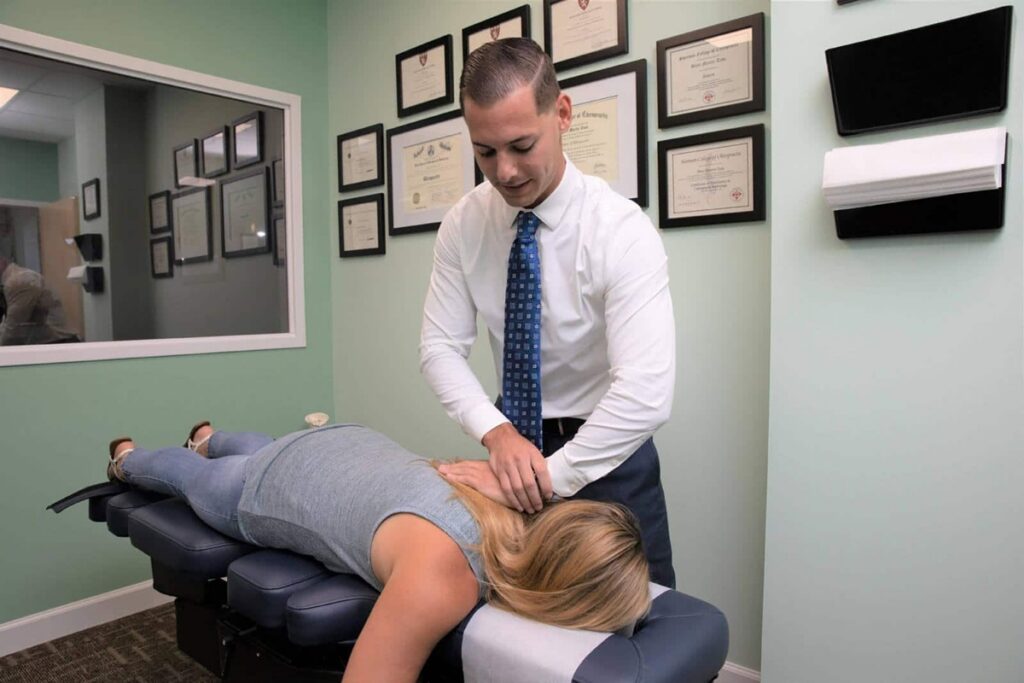
After ensuring your child has been seen by a medical professional for any acute concerns — including ruling out fractures or neurological emergencies — chiropractic care is often an excellent next step for addressing the musculoskeletal effects of whiplash. Dr. Brett Tave at ShoreLife Chiropractic & Wellness in Brick Township, NJ has experience working with patients of all ages, including children recovering from auto accidents.
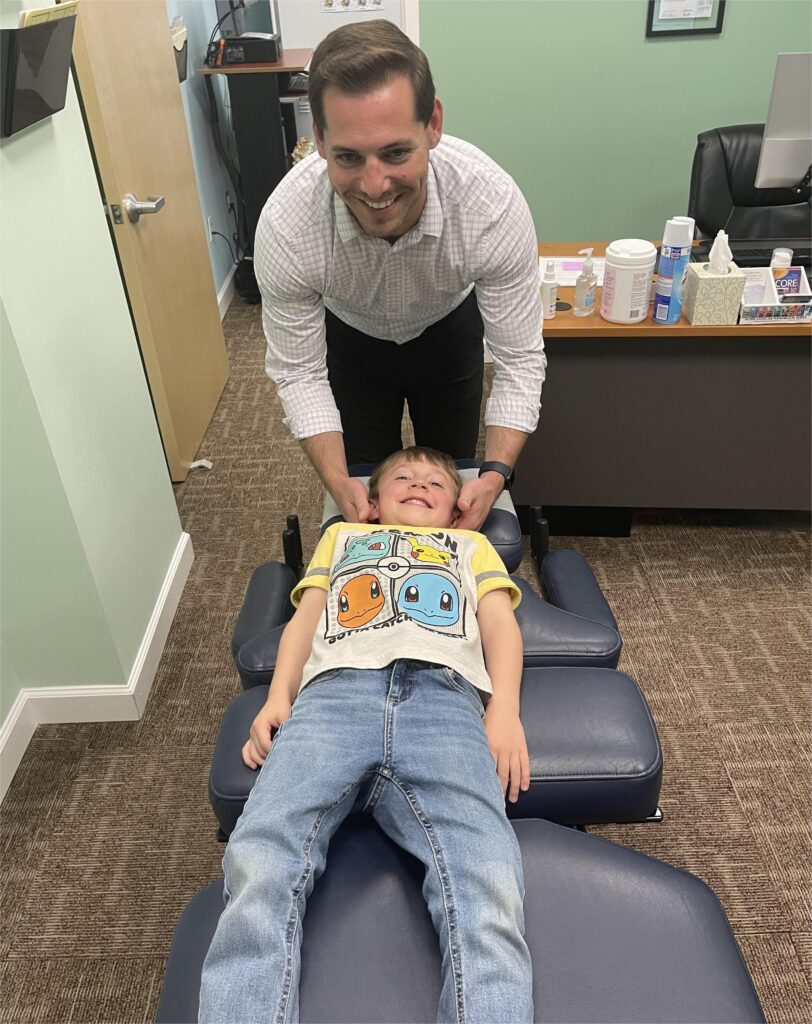
Chiropractic care for childhood whiplash typically focuses on gentle spinal assessment and, when appropriate, very light adjusting techniques specifically adapted for a child’s developing spine. The goal is to identify any areas of reduced mobility, joint irritation, or muscular tension that resulted from the accident, and to support the body’s natural healing process. It is important to understand that chiropractic adjustments for children are performed very differently than those for adults — the force used is minimal, often no more than the gentle pressure you’d use to check the ripeness of a tomato.
In addition to spinal care, Dr. Brett Tave may incorporate soft tissue work, postural guidance, and movement recommendations to support full recovery. Chiropractic care takes a whole-body approach, which means the focus isn’t just on the neck — it’s on restoring normal function throughout the spine and supporting the child’s overall wellness. Evidence from conservative care literature indicates that chiropractic intervention can be a helpful component of a multidisciplinary approach to whiplash recovery, particularly when started in a timely manner.
One of the most valuable aspects of seeking chiropractic evaluation promptly is that it can help identify problems before they become chronic. Whiplash injuries that go unaddressed can sometimes contribute to ongoing neck stiffness, recurring headaches, and postural changes over time. Getting your child assessed early gives them the best chance at a full and comfortable recovery.
Practical Tips for Supporting Your Child at Home
While professional evaluation and care are essential, there is plenty you can do at home to support your child’s comfort and healing in the days following a car accident. Rest is important, but it should be balanced — too much immobility can actually slow recovery. Encourage your child to move gently within a comfortable range, avoiding activities that significantly increase pain.
Keep an eye on your child’s sleep position. Lying flat on their back with a supportive pillow that keeps the neck in a neutral position is generally more comfortable than stomach sleeping, which can strain the cervical spine. If your child is used to stomach sleeping, gently encourage a side or back position during the healing period.
Limit screen time and heavy cognitive activities in the days immediately following the accident, especially if your child is experiencing headaches or difficulty concentrating. The brain and nervous system are doing important work during recovery, and reducing overstimulation can be genuinely helpful. Keep communication open with your child’s school and teachers so accommodations can be made if needed. And of course, follow up with any healthcare providers — including Dr. Brett Tave at ShoreLife Chiropractic & Wellness — as directed to monitor your child’s progress.

When to See a Chiropractor After a Car Accident
Ideally, you should have your child evaluated by a chiropractor as soon as possible after a car accident — even if they seem to feel okay at first. As mentioned earlier, whiplash symptoms can be delayed, and early assessment gives the care team a baseline from which to work. In Brick Township, NJ and the surrounding communities, many families come to ShoreLife Chiropractic & Wellness within the first few days after an accident for exactly this reason.
There are specific signs that should prompt you to seek care without delay. If your child complains of severe neck pain, cannot move their head in a normal range of motion, experiences numbness or tingling in the arms or hands, or is showing signs of confusion or dizziness, those symptoms warrant prompt attention. If at any point your child loses consciousness — even briefly — or shows neurological signs like slurred speech or vision changes, go to the emergency room first and follow up with a chiropractor once the acute situation has been addressed.
For milder symptoms — such as general neck soreness, stiffness, or headaches that appear in the days following the accident — a chiropractic evaluation is an excellent and appropriate first step. Chiropractic care is non-invasive, drug-free, and tailored to the individual patient, making it a particularly good fit for children who parents understandably want to keep away from unnecessary medications or procedures.
Whiplash Symptoms vs. Common Triggers
|
Symptom |
Common Trigger After Car Accident |
What It May Indicate |
|---|---|---|
|
Neck pain and stiffness |
Rapid forward/backward head movement during impact |
Cervical muscle strain or ligament sprain |
|
Headaches at the base of the skull |
Tension in the upper cervical joints and muscles |
Cervicogenic headache related to whiplash |
|
Force transmitted from cervical spine downward |
Referred pain or associated muscle tension |
|
|
Tingling or numbness in arms |
Nerve irritation from joint displacement or swelling |
Possible nerve root involvement — warrants evaluation |
|
Dizziness or difficulty concentrating |
Disruption to upper cervical proprioception |
Concussion or cervicogenic dizziness — needs assessment |
|
Irritability and sleep changes (in young children) |
Inability to verbalize pain and discomfort |
May signal underlying musculoskeletal discomfort |
Myths vs. Facts About Childhood Whiplash
Myth: If the car accident was minor, my child couldn’t have whiplash.
Fact: The severity of vehicle damage does not reliably predict the presence or severity of soft tissue injury. Research in the field of biomechanics indicates that low-speed collisions can still produce enough force to strain the muscles and ligaments of the neck, particularly in children whose supporting structures are still developing.
Myth: Children bounce back faster than adults, so whiplash isn’t a big deal for kids.
Fact: While children do often have good recovery potential, that doesn’t mean whiplash injuries should be ignored. Untreated soft tissue injuries can contribute to chronic neck pain, poor posture, and recurring headaches if left unaddressed. Early, appropriate care supports better long-term outcomes.
Myth: Whiplash only affects the neck.
Fact: Whiplash is a whole-body event. The force from a collision travels through the spine and can affect the upper back, shoulders, and even contribute to headaches and cognitive symptoms. A thorough evaluation looks at the entire musculoskeletal system, not just the neck in isolation.
Myth: You need to wait and see if symptoms develop before seeking care.
Fact: Waiting can actually work against your child’s recovery. Getting an evaluation early — even before significant symptoms appear — helps establish a baseline and allows for prompt treatment if needed. Early intervention is widely considered a better approach than a prolonged “wait and see” strategy for soft tissue injuries.
Myth: Chiropractic care isn’t safe for children.
Fact: Chiropractic care for children uses very gentle, age-appropriate techniques that are very different from adult adjustments. When performed by a qualified chiropractor, pediatric chiropractic care has a strong safety profile. Organizations like the American Chiropractic Association recognize chiropractic as a conservative, appropriate care option for patients across the lifespan.
Final Thoughts from ShoreLife Chiropractic & Wellness
Parenting through the aftermath of a car accident is stressful, and it’s natural to feel overwhelmed trying to figure out the right next steps for your child. The most important thing you can do is trust your instincts, stay observant, and seek professional evaluation sooner rather than later. You don’t have to wait until your child is in significant pain to get them checked out.
Here at ShoreLife Chiropractic & Wellness in Brick Township, NJ, Dr. Brett Tave understands that every child is different and that recovery from a whiplash injury is not one-size-fits-all. Our approach is gentle, individualized, and focused on supporting your child’s body in doing what it does naturally — healing. We work collaboratively with families throughout the Brick Township community and the broader Ocean County area to make sure kids get back to feeling like themselves as safely and comfortably as possible.
If your child was recently in a car accident and you’re not sure whether whiplash is a concern, don’t hesitate to reach out to our office. A conversation costs nothing, and peace of mind is invaluable. The team at ShoreLife Chiropractic & Wellness is here to answer your questions and help guide your family in the right direction.
Frequently Asked Questions
Can a toddler or infant get whiplash from a car accident?
Yes, very young children — including infants — can sustain soft tissue neck injuries during a car accident. Because they cannot verbalize pain, symptoms may show up as unusual crying, reluctance to turn the head, or changes in feeding and sleep behavior. Any infant or toddler involved in a collision should be evaluated by a healthcare provider promptly.
How long does it take for a child to recover from whiplash?
Recovery time varies depending on the severity of the injury, the child’s age, and how quickly appropriate care was received. Many mild to moderate cases resolve within a few weeks with proper care, while more significant injuries may take longer. Early evaluation and consistent follow-through with recommended care tend to support faster recovery.
Is it safe to take my child to a chiropractor for whiplash?
Yes, chiropractic care is generally considered safe for children when provided by a qualified, experienced chiropractor. Techniques used with children are very gentle and specifically adapted for developing bodies. Dr. Brett Tave at ShoreLife Chiropractic & Wellness in Brick Township, NJ is experienced in working with pediatric patients following auto accidents.
My child seems fine after the accident. Should I still get them evaluated?
Yes — whiplash symptoms frequently do not appear until 24 to 72 hours after the accident. Getting an early evaluation allows a chiropractor to assess the spine and surrounding structures before symptoms fully develop, which can support better outcomes and help catch issues that might otherwise go unnoticed.
Will my child need X-rays after a car accident?
This depends on the clinical evaluation findings. A chiropractor will assess your child’s range of motion, posture, and neurological responses and will recommend imaging if there is any reason to believe a fracture or significant structural issue may be present. Not every case of whiplash requires X-rays, but they may be recommended when warranted.
What should I tell my child’s school after a whiplash injury?
Let teachers and school administrators know what happened and what symptoms your child is experiencing, particularly headaches or difficulty concentrating. Requesting temporary accommodations — such as reduced screen time, modified physical education participation, or extra time on assignments — can make a meaningful difference in your child’s comfort and recovery during the school day.
TL;DR Summary
-
Whiplash can happen to children in car accidents of any speed — even minor collisions can cause soft tissue injuries to the neck.
-
Symptoms like neck pain, headaches, and irritability may not appear until 24 to 72 hours after the accident, so watching carefully in the days that follow is important.
-
Children are particularly vulnerable to whiplash due to their proportionally larger heads and still-developing cervical muscles and ligaments.
-
Chiropractic care — offered in a gentle, child-appropriate way — can be an effective, drug-free part of whiplash recovery when started promptly.
-
If your child was in a car accident, Dr. Brett Tave at ShoreLife Chiropractic & Wellness in Brick Township, NJ is here to provide a thorough, compassionate evaluation and help guide their recovery.